
🌱 This week at Red Ants Farm
Lambing's started, and I've been out walking paddocks twice a day when feeding out.
The first were twins, arrived through the night without any trouble at all. Then one of them got adopted by a different ewe — one who hasn't even lambed yet. She's decided he's hers, and he has gone along with it entirely. He seems completely unbothered by the arrangement, and he's getting a feed wherever the opportunity presents itself, which is more than can be said for the rest of us this month.
The feeding-out walk is where this issue came from. I kept ending up standing in three different paddocks with my phone out, and the photos genuinely surprised me.
🌾 This week's topic
Three paddocks, three rest periods, and the one that won isn't the one you'd pick.
Same morning, same weather, my hand in each shot so you can judge it rather than take my word for it.
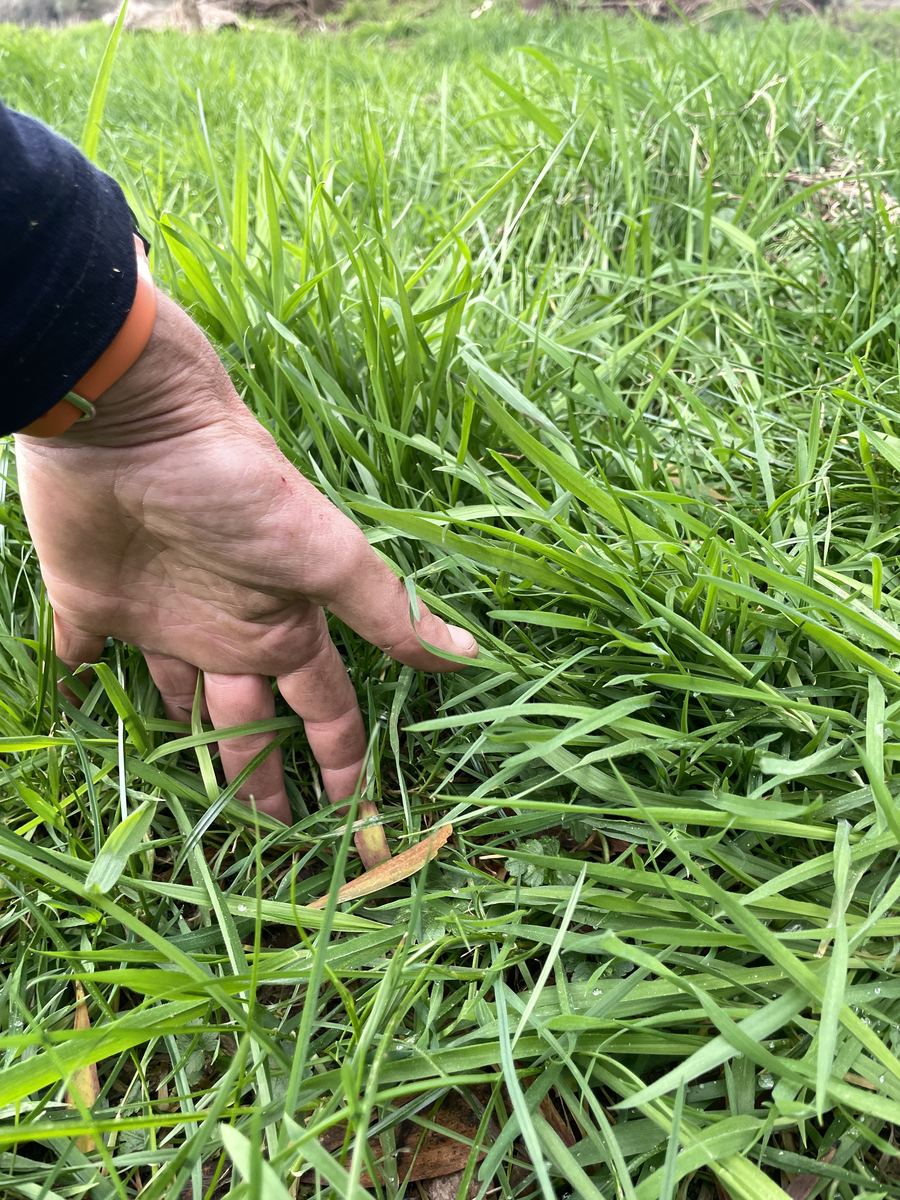
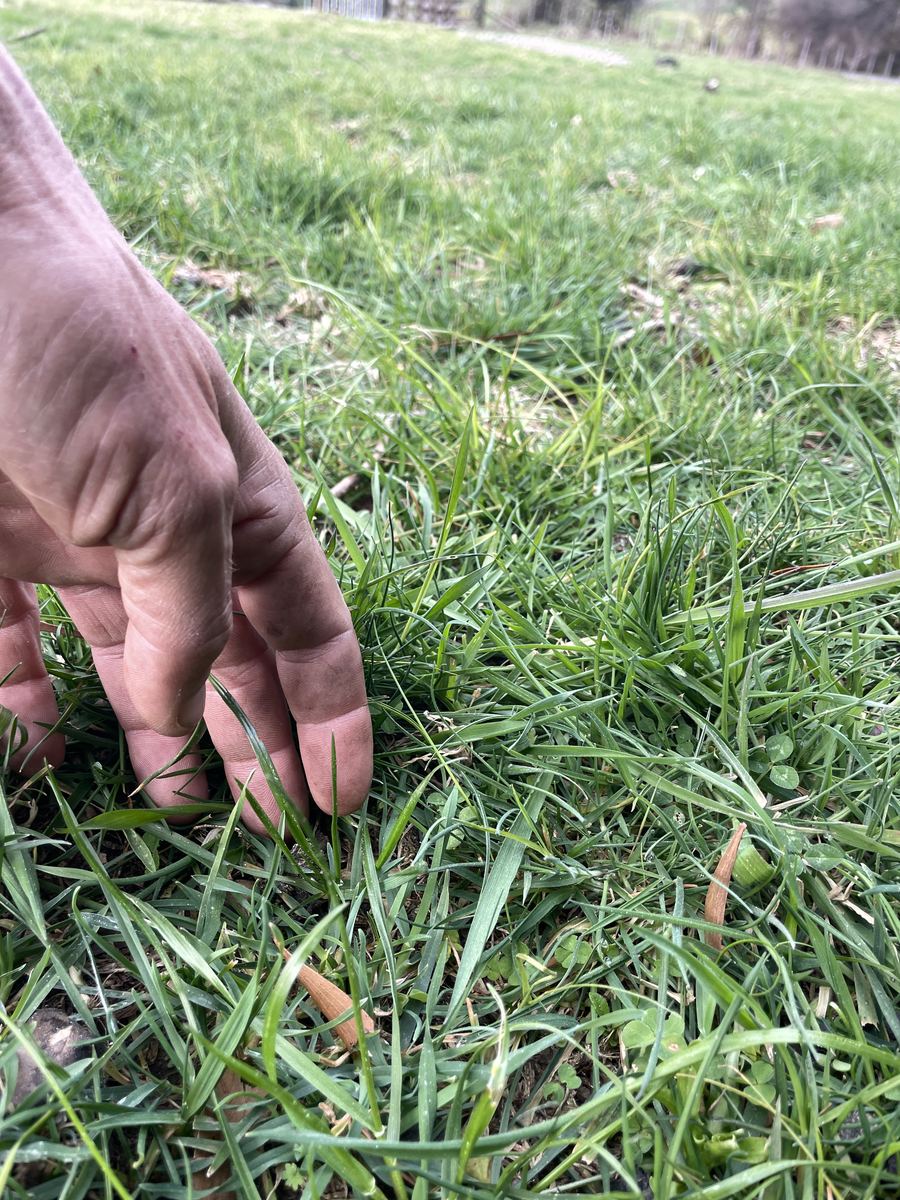
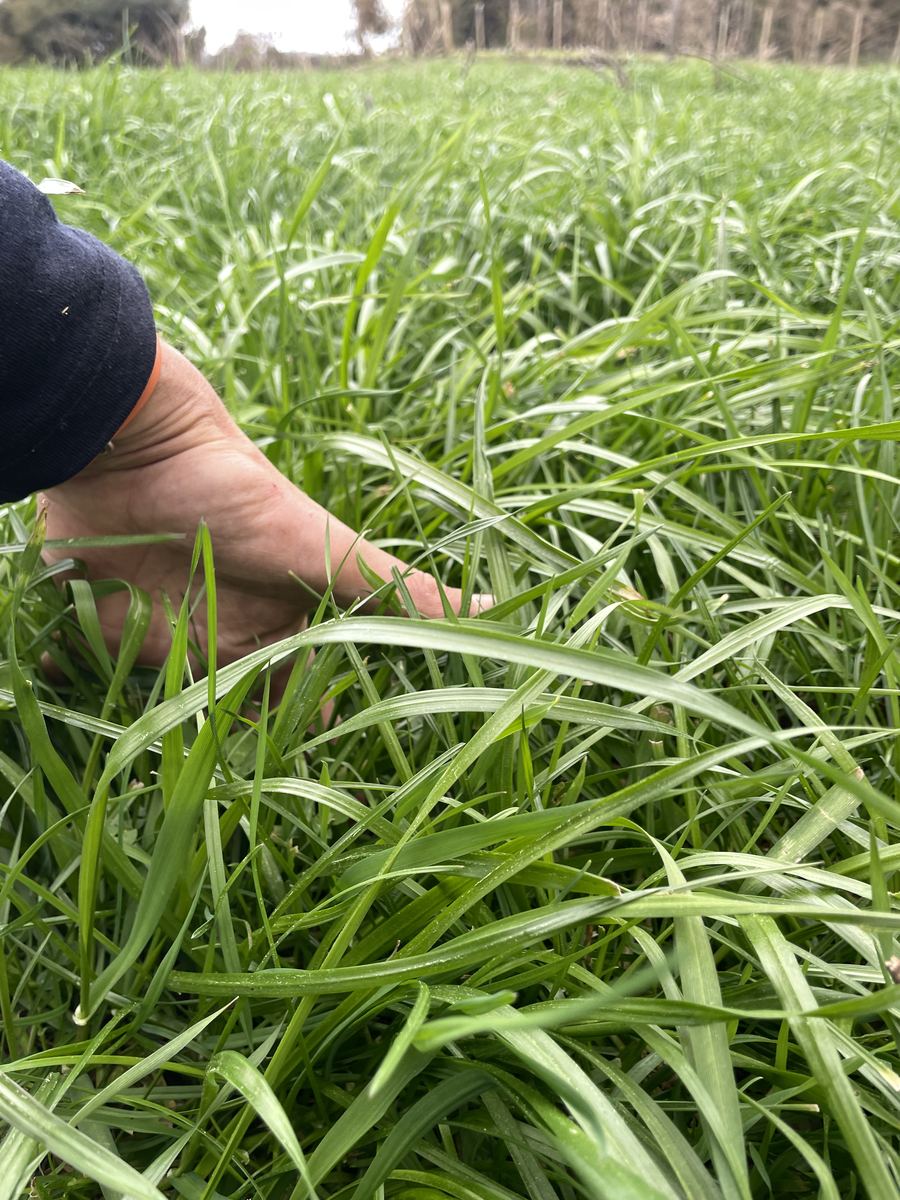
So 24 days beat 42. If I'd been running this place off a spreadsheet with a rest-days column, I'd have grazed number 3 last and number 2 first, and been wrong both times.
What the days were standing in for
Two things, neither of them time.
What you left behind last time. A grass plant regrows from the leaf still catching sunlight and from the reserves in its roots. Leave a decent residual and it regrows off sunlight — fast and free. Graze it into the dirt and it has to rebuild from reserves first, out of a root system it's just been forced to shrink. That's most of what I'm seeing in Paddock 2: it starts every round further behind, so the rest never catches up. It isn't resting. It's convalescing.
What's actually growing there. Kikuyu is a subtropical grass — brilliant in February, sits down and waits through the cold. A winter rest buys far less in a kikuyu paddock than the same days buy in ryegrass.
Being straight with you: this isn't a trial. Rest, grazing history and species all differ at once, so I can't tell you how much is which, and nor can anyone else from three photos.
🔧 The useful part
It tells you which paddock needs work.
This is the bit I nearly missed, and it's worth more than the comparison itself.
Recovery measured against rest is a diagnostic. If a paddock has had a fair rest and come back well, it's fine — keep doing what you're doing. If it's had a fair rest and come back badly, more rest is not the answer. You can give Paddock 2 another fortnight and it will still be Paddock 2. Time isn't what's wrong with it.
What it's telling you is that the paddock needs work, not patience. Roughly in order of cost:
- Take it out of the rotation for a couple of cycles. The cheapest option and often enough on its own — a paddock that's been thrashed needs a proper spell to rebuild roots, not just the standard round. Skip it twice.
- Oversow it. Cheaper and less disruptive than a full job — put seed into what's there and let it thicken up.
- Redo it properly. The expensive one, and sometimes the honest one. Paddock 3 is my evidence that it works: resown last autumn, and it's now outperforming a paddock with 18 more days' rest.
The point is that until you compare recovery against rest, a bad paddock just looks like a paddock that needs more time — so you keep giving it more time, for years, and it never comes right. Go and stand in your worst one this week. If the days don't explain it, the days aren't the problem.
And the free check while you're there: DairyNZ's guidance for ryegrass is to graze at about three new leaves per tiller — two is too early, past four and the oldest leaf is dying anyway. Look at the base rather than the top, because a paddock can look green from the gate and be nearly empty at ground level. Both DairyNZ and Beef + Lamb NZ publish target residuals worth looking up for your own system, rather than taking a number off me. Issue #5 covers the three-leaf check in full.
☀️ And why it matters more than usual this year
A very strong El Niño is forecast for summer.
Earth Sciences New Zealand (NIWA)'s August–October outlook, published at the end of July, puts a 100% chance of El Niño conditions over those three months and a 90% likelihood of it reaching or exceeding "very strong", peaking over the 2026–27 summer. Rainfall: below normal for most of the North Island, near or below for the north and east of the South Island, above normal for the west of the South Island.
The mistake that sets you up for is a spring mistake, not a summer one. Spring gives you a flush, the flush makes everything look fine, and it's easy to graze hard through it because there's plenty. Then January arrives and the paddocks that got hammered in the good months are the ones with no roots to find water with. Paddock 2 is what a hard summer does to a paddock that went in already tired — I just got there early, in winter, by my own hand.
What I'm doing about it: oversowing chicory, plantain and clover. Two reasons — ground cover, because bare dirt between plants bakes and cracks and every gap is where moisture leaves and weeds arrive; and taproots, because chicory and plantain send a proper root down rather than a shallow mat, so the theory is they'll still be finding water when the ryegrass has given up. I'm also not grazing Paddock 3 hard, even though it's the most tempting one, which is uncomfortable and correct.
⚠️ Take that as "what I'm trying", not advice — what suits Northland clay isn't what suits Canterbury. Worth a conversation with a local seed rep, plus DairyNZ's and Beef + Lamb's forage material. I'll tell you in February whether it worked.
One confession: the seed I resowed Paddock 3 with was uncertified, because it was a lot cheaper. It's worked out very well. It could easily not have — uncertified seed is a gamble on what's actually in the bag, and I'd rather say so than have someone spend money on the strength of one paddock on my place.
📲 And where the app fits
It counts the days. You still have to go and look.
Odd thing to write in an app newsletter, so let me be precise. My Block Hand tracks when stock go on and off each paddock and how long each has rested, and shows you the map. That tells you which paddock to walk to first. It can't tell you whether that paddock is ready, because the days aren't the thing.
So use it as the shortlist, not the verdict. The useful trick is what you do after the walk — see this week's tip below, because that's the bit that makes the day-count worth anything.
🛠️ What's new
Two fixes worth owning, and an Android update.
- 🥩 Meat and production records now show up where you'd look for them. Flagged last week, fixed this week. Someone processed roosters, went to the flock to find the record, and it wasn't there — it existed, just filed somewhere they had no reason to look. Straight from an email. Keep them coming.
- ✅ Milestone ticks now actually save. Worth owning: ticking a milestone looked like it saved and then wasn't there next time. It had been doing that since April, and the same fault was quietly discarding custom care intervals and milestone templates. If you gave up on that screen months ago, it works now.
- 📱 The Android app updated — it now sits properly on modern phones instead of hiding under the status and gesture bars.
🔜 Next: a vet-ready PDF of an animal's treatment history · a block biosecurity checklist with a 14-day quarantine countdown · exports that include the milestone and timeline data they're currently missing.
🗓️ On the block this month — NZ, mid-August
Lambing, calving, and what you leave behind.
- Shelter is doing more for lamb and calf survival this fortnight than anything else available to you. A wet, windy night costs more than a cold, still one.
- Feeding is decisive now, not merely important. Beef + Lamb NZ's pre-lamb guidance: energy is the limiting factor in the final weeks, quality beats quantity, and thin multiple-bearing ewes want your best paddock rather than your biggest.
- Don't graze it out. What you leave behind this month sets how fast the spring flush arrives — and, per the outlook above, how those paddocks cope in January.
- NAIT for calves: tagged and registered within 180 days of birth, or before the first movement off-property, whichever comes first.
- New birds still get 14 days on their own. Point-of-lay pullets go on sale as the days lengthen. MPI hotline: 0800 80 99 66.
💡 A practical tip
Turn the walk into a number.
When you've stood in a paddock and decided it's ready — or nowhere near it — don't just act on it and move on. Go and change that paddock's rest target for that season in the app.
The app starts you on a seasonal default: much longer in winter than summer, because that's how the published guidance runs. But a default is a guess about the average block, and 24 days in Northland is not 24 days in Southland. Mine were miles out in both directions — my winter default was well beyond what Paddock 3 actually needed, and well short of what Paddock 2 needs. Same block, same season, three different right answers.
It buys you two things. Next round the prediction is closer to right, because it's your paddock and your soil rather than a national average. And next winter you've got something to compare to — "this paddock needed 24 days last year, 40 the year before" is a real answer to whether the work you did on it paid off.
One walk, one number, thirty seconds. It's the only way the day-count ever gets any good.
💬 A community question
Which is your problem paddock — and does the rest time explain it?
Everyone's got one. The one that's always behind, that you keep giving another week, that never quite comes right.
Go and stand in it this week and put your hand in it. Then tell me: is it what's growing there, or how it's been grazed — or something else entirely, like wet feet, shade, compaction, or the spot where everything gets fed out in winter?
Reply to the Bulletin and send a photo if you've got one. I'll put the good ones in a future issue with your permission. I'm genuinely curious whether the pattern on my place holds anywhere else, because three paddocks is a story, not a finding.